1600 Years of Church’s Slavery

The body of Christ, the church, the people of God, has been trapped for 1600 years (40 × 40) in the schemes and structures of the powers and principalities of this world. Not only externally, in terms of cooperating with them, receiving benefits, subsidies and privileges, spreading the gospel by force, etc., but also internally, in terms of the internal dynamics of worship and community order. Patterns, structures and forms of authority in external society have influenced the understanding of authority within the Christian community and, consequently, its internal functioning. This process began as early as the 2nd century, and was sealed and finally established by 313 AD, when Christianity became the favoured (and soon afterwards the only permitted) religion of the Roman Empire. Following the pattern of human powers and religions, a separation between clergy and laity (even if it is not called that!) has developed within the body of Christ, which in practice means that most of the bodily functions are taken over by a small group of leaders, while the other members are passive, atrophied, moribund. And the leaders tend to get burned out – especially if they are conscientious in their work. Instead of a body where every member contributes (1Co 12:6–7; 14:26; Eph 4:16) and co-labours, we have a kind of association where the majority is inactive and where the leaders often dominate according to the pattern of the worldly authority and power (Mk 10:42). It is a gathering modelled by the imperial civil service, quite bureaucratic, rather than a sanctuary of the body of Christ where the Spirit works powerfully and effectively through every member; a body that spreads and grows in small holy communities (Mt 18:18–20) throughout the whole world (Mt 28:18–20; Col 1:6).

Nadaljuj z branjem “1600 Years of Church’s Slavery”

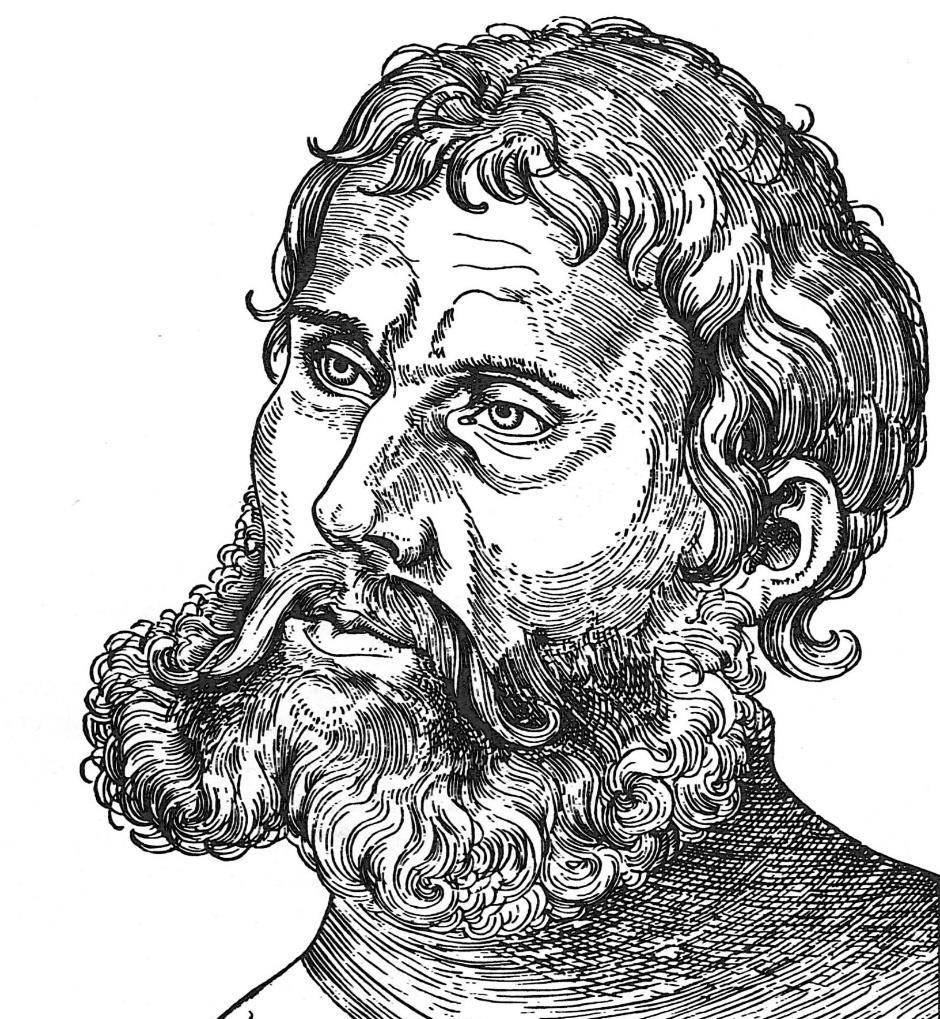
Martin Luther on the House Church

But the third sort [of Divine Service], which the true type of Evangelical Order should embrace, must not be celebrated so publicly in the square amongst all and sundry. Those, however, who are desirous of being Christians in earnest, and are ready to profess the Gospel with hand and mouth, should register their names and assemble by themselves in some house to pray, to read, to baptize and to receive the sacrament and practise other Christian works. In this Order, those whose conduct was not such as befits Christians could be recognized, reproved, reformed, rejected, or excommunicated, according to the rule of Christ in Matt. xviii. Here, too, a general giving of alms could be imposed on Christians, to be willingly given and divided among the poor, after the example of St. Paul in 2 Cor. ix. Here there would not be need of much fine singing. Here we could have baptism and the sacrament in short and simple fashion: and direct everything towards the Word and prayer and love. Here we should have a good short Catechism about the Creed, the Ten Commandments, and the Lord’s Prayer. In one word, if we only had people who longed to be Christians in earnest, Form and Order would soon shape itself. But I cannot and would not order or arrange such a community or congregation at present. I have not the requisite persons for it, nor do I see many who are urgent for it. But should it come to pass that I must do it, and that such pressure is put upon me as that I find myself unable with a good conscience to leave it undone, then I will gladly do my part to secure it, and will help it on as best I can.

Martin Luther: German Mass, Wittemberg, 1526 (part of the preface)
Nadaljuj z branjem “Martin Luther on the House Church”

Primacy of Discipleship

How can we know that discipleship is really the first, the most important call that comes from God to people, including and especially to “believers”? That it is the primary lens through which we can and must view everything “Christian”?

Jesus and the New Testament speak of disciples all the time, but only three times of “Christians”. When Jesus calls a man, he always calls him to follow him – as his disciple. Those from the wider crowd who need a miracle from him he calls to faith, but those who are to be or who want to be close to him personally he calls to discipleship, to the life of a disciple. The former is evangelism, the latter is life in the new covenant with God.

Nadaljuj z branjem “Primacy of Discipleship”

Jesus’ New Family

In what follows I would like to explore Jesus’ view on the subject of the family with its intimate ties and obligations, from the viewpoint of the radical newness of the kingdom of God that he is ushering in. In doing this I will have to challenge the contemporary conviction which is prevalent among Evangelical and also Catholic Christians and is even unquestionably held as “biblical”.

I want to approach this as a study of relevant sayings of Jesus on this matter as found in the Gospels, and then supplement it with passages from Pauline corpus and from other New Testament letters. This latter evidence is obviously secondary, but as we can safely assume, the apostolic writings maintain and echo many of the “Jesus traditions”, so their testimony can be used as an auxiliary source and a means of clarification of what Jesus taught on the subject, as well as evidence how the first generations of Christians put his teachings into practice in the early communities.

Nadaljuj z branjem “Jesus’ New Family”